

Types of Screws and Their Uses: A Homeowner's Guide
Table of Contents
- Quick Comparison: Common Types of Screws at a Glance
- Wood Screws: The Go-To Fastener for Timber Projects
- Machine Screws, Sheet Metal Screws, and Masonry Screws
- Screw Size Chart: Matching Diameter and Length to Your Project
- How to Identify Screw Types by Head, Drive, and Thread
- Best Screws for Outdoor Wood: Corrosion Resistance and Compatibility
- Installation Tips and Common Mistakes to Avoid
- Frequently Asked Questions
Last Updated: October 5, 2026
Quick Comparison: Common Types of Screws at a Glance
Learning the main types of screws and their uses saves a wasted trip, a stripped hole, or a failed repair.
The three families covering almost every job are wood screws, machine screws, and sheet metal screws, with masonry screws for brick and block.
| Screw Type | Best For | Thread Style | Typical Material |
|---|---|---|---|
| Wood screw | Timber, studs, furniture | Coarse, tapered point | Wood |
| Machine screw | Metal, machinery, tapped holes | Fine, uniform | Metal, plastic |
| Sheet metal screw | Thin metal, ductwork | Sharp, self-tapping | Sheet metal |
| Masonry screw | Brick, block, concrete | High-low, self-tapping | Masonry |
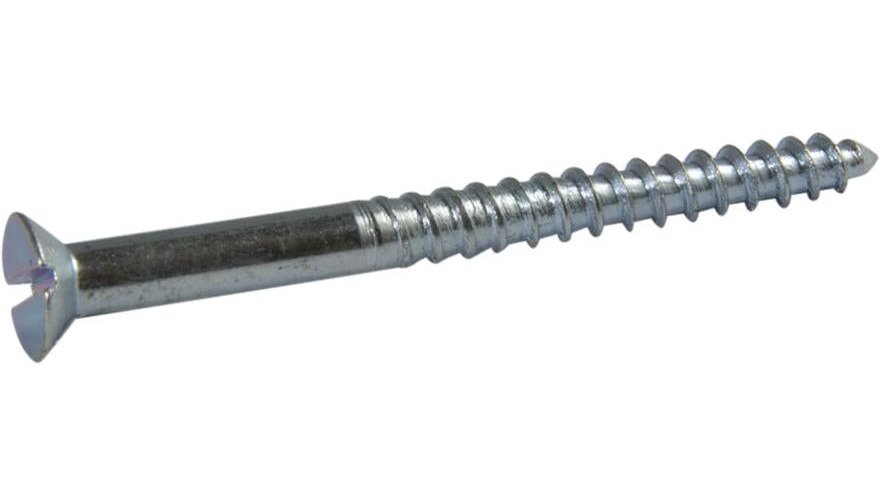
Wood Screws: The Go-To Fastener for Timber Projects
A wood screw has a coarse thread, a tapered point, and a smooth upper shank that pulls two pieces of timber tight. It cuts its own path, so you rarely need a nut.


Our 8 x 2 Slotted Flat Wood Screw Zinc Plated uses a deep penetrating thread for holding power across wood types. For framing, the 12 x 3 Phillips Oval Head Wood Screw adds length and a Phillips drive that sits firmly in the bit.
Flat Head vs. Oval Head Wood Screws
Flat head wood screws sit flush once driven, suiting decking, framing, and any joint you plan to cover. Oval head screws leave a raised, decorative dome, common on hinges and cabinet hardware. Pick flat for a smooth finish, oval when appearance matters.
Choosing the Right Wood Screw for the Job
Match screw length to roughly two-thirds of the material thickness you're joining. Coarse threads bite quickly in softwoods; in hardwoods, drill a pilot hole first to prevent splitting.
Machine Screws, Sheet Metal Screws, and Masonry Screws
Machine screws join metal to a threaded hole or nut, sheet metal screws tap their own thread into thin metal, and masonry screws anchor into brick, block, or concrete. The choice comes down to what you're fastening and whether the material holds a thread on its own.
Machine Screws for Metal and Machinery
A machine screw has uniform fine threads and pairs with a nut or tapped hole rather than cutting its own path. Our M5-0.80 x 16 Tamper Resistant Torx Button Head Machine Screw is 18-8 stainless steel, resisting corrosion and heat indoors and out. The 6-32 x 3/8 Phillips Truss Machine Screw suits jobs needing a raised head plus corrosion resistance.
Sheet Metal Screws for Thin Metal and DIY Repairs
Sheet metal screws have sharp, widely spaced threads and a pointed tip, tapping their own hole as you drive them. Our #6-18 x 1in Phillips Pan Tapping Screw Type A Clear Zinc joins wood and metal but needs a pilot hole first. For security, the 10 x 2 Tamper Resistant Torx Drive Button Head Sheet Metal Screw resists removal with ordinary drivers, ideal for exterior panels and equipment housings.
Masonry and Concrete Screws for Brick and Block
Masonry screws cut threads into brick, block, and concrete without a plastic plug. Drill a pilot hole with a masonry bit matched exactly to the screw's minor diameter, then drive on low torque.
Screw Size Chart: Matching Diameter and Length to Your Project
Screw sizes use a gauge number for diameter and a length in inches, so an 8 x 2 screw is gauge 8 and two inches long.
Reading Imperial Gauge Sizes
Gauge numbers are not linear. A #10 is not twice as thick as a #5, the jump is roughly 0.013 in per step in smaller sizes, growing as the gauge climbs.
| Gauge | Approx. Major Diameter | Common Use | Typical Length Range |
|---|---|---|---|
| #4 | ~0.112 in | Small hinges, electronics, drawer slides | 3/8 in to 3/4 in |
| #6 | ~0.138 in | Cabinet hardware, light trim, small repairs | 1/2 in to 1 in |
| #8 | ~0.164 in | General woodwork, cabinetry, furniture | 1 in to 2 in |
| #10 | ~0.190 in | Framing, decking, metal panels | 1 1/2 in to 3 in |
| #12 | ~0.216 in | Heavy timber, structural joints | 2 in to 3 in and up |
| #14 | ~0.242 in | Ledger boards, heavy framing | 2 1/2 in to 4 in |
Reading Metric Machine Screw Sizes
Metric machine screws read differently. An M5-0.80 x 16 screw is 5 mm in diameter, has a 0.80 mm thread pitch, and is 16 mm long. Pitch matters: M5-0.80 and M5-0.50 are both "M5" but only one threads into a given nut. When in doubt, bring the old screw or measure with calipers.
Choosing Length by Material and Joint
For wood joints, the threaded portion should engage roughly two-thirds of the thickness of the piece you are fastening into, not through. A 1 in board joined to a 1 in board calls for a screw around 1 1/2 in to 1 3/4 in long.
For sheet metal, the screw passes through the top sheet and cuts threads into the bottom, so length is measured against the combined stack plus a few threads.
Pilot Hole Sizing by Material
Pilot hole diameter is where most sizing mistakes happen, since the correct size depends on both the screw and the material.
- Softwood: pilot hole roughly equal to the screw's minor diameter (the shank between threads). A #8 wood screw typically wants a 1/8 in bit in pine.
- Hardwood: go slightly larger, a #8 in oak often wants a 9/64 in bit, because the wood has less give and will split if the screw forces its own path.
- Sheet metal: thin gauge usually needs no pilot hole for a self-tapping screw; thicker sheet or hard alloys benefit from a pilot slightly smaller than the minor diameter.
How to Identify Screw Types by Head, Drive, and Thread
Identifying a screw comes down to three features: head shape, drive recess, and thread pattern. Read them in that order and you can name almost any screw in your junk drawer.
12 x 3 Phillips Oval Head Wood Screw Zinc Plated →
- Head shape: flat, pan, round, oval, truss, button, or hex. Flat heads countersink; pan and truss heads sit above the surface.
- Drive type: Phillips, slotted, square, Torx, or Robertson.
- Thread: coarse and tapered signals a wood screw; fine and uniform signals a machine screw; sharp and wide signals a sheet metal screw.
- Point: a sharp tapered point self-taps into wood or thin metal; a blunt end means it needs a pre-tapped hole or nut.
Best Screws for Outdoor Wood: Corrosion Resistance and Compatibility
The best screws for outdoor wood are coated or stainless steel fasteners rated for exterior use. Zinc screws that last years indoors can rust solid within a season outside.
Material choice drives the outcome here:
- Zinc plated: fine for indoor and sheltered outdoor use, but not for constant moisture.
- Stainless steel: the safest choice near salt air, pools, and pressure-treated timber.
- Coated or painted steel: good middle ground for decks and fences.
One compatibility rule trips up a lot of people. Our 5/16-18 x 2 1/2 Torx Floorboard Screw carries a note we repeat often: it is not for use with new pressure-treated wood.
Installation Tips and Common Mistakes to Avoid
Most screw failures come from a handful of avoidable errors: pilot-hole sizing, driving torque, and bit fit.
Pilot Holes: Size, Depth, and When to Skip Them
A pilot hole removes material so the screw doesn't split the wood, and guides it straight. The correct diameter is roughly the screw's minor diameter, the shank between the threads, not the outer thread diameter.
You can skip the pilot hole in softwood with a sharp screw and a steady driver, but the moment you feel the wood creak or see a hairline crack at the edge, stop and pre-drill.
Driving Torque and Bit Fit
Over-tightening is the most common cause of stripped holes and crushed material. The screw only needs to seat the head against the surface; beyond that, torque adds no holding power.
Bit fit matters just as much. A worn or wrong-size Phillips bit cams out and rounds the head, especially on the final turns.
When a Screw Alone Is Not Enough
Screws hold by cutting or engaging threads in the base material. When the material can't hold a thread, hollow drywall, thin paneling, crumbling plaster, a hollow-core door, a screw alone pulls out under load. That's when you reach for an anchor: a plastic or metal expansion anchor in drywall, a toggle bolt in a hollow wall, or a sleeve anchor in masonry.
Load, Spacing, and Structural Safety
Screw type alone does not establish load capacity. For anything load-bearing, a ledger board, deck railing, wall-mounted TV, check the manufacturer's load ratings and follow local building guidance.
In structural work, use more screws at closer spacing rather than fewer, larger screws.
The Mistakes We See Most
- Skipping the pilot hole in hardwood or near an edge, which splits the board.
- Over-tightening into masonry or drywall, which crumbles the material and kills the hold.
- Mismatched or worn drive bits, which strip the recess and make removal a chore.
- Using plain steel outdoors, which rusts and stains the surrounding wood.
- Wrong length, either poking through the far side or too short to grip.
- No anchor in hollow material, which lets the screw pull straight out under load.
- Ignoring load ratings on structural joints, which turns a repair into a safety issue.
For a deeper reference on fastener standards, the American Society of Mechanical Engineers standards for fasteners documents the specifications behind head and thread dimensions. The Occupational Safety and Health Administration guidance on hand and power tool safety is worth a look before any project that involves a drill or driver for long stretches.
Frequently Asked Questions
What are five different types of screws?
Five common types of screws are wood screws, drywall screws, deck screws, machine screws, and sheet metal screws. Wood screws have coarse threads and a smooth shank for holding timber. Drywall screws have fine threads and a bugle head for plasterboard. Deck screws are coated for outdoor use. Machine screws have uniform threads for metal. Sheet metal screws are self-tapping for thin metal.
How do I identify my screw?
To identify a screw, check three things: head shape, drive type, and thread. The head might be flat, pan, or oval. The drive could be Phillips, slotted, Torx, or square. Threads are either coarse for wood or fine for metal. Measure the diameter and length with a caliper or ruler. Compare against a screw size chart to confirm.
Which screws are best for outdoor wood projects?
For outdoor wood, choose screws made from stainless steel or coated with zinc or ceramic. Stainless steel offers the best corrosion resistance. Avoid plain steel screws, which rust quickly. Also match the screw to the wood: for pressure-treated lumber, use galvanized or stainless steel screws only. The [12 x 3 Phillips Oval Head Wood Screw Zinc Plated](https://diyhomeessentials.com/products/12-x-3-phillips-oval-head-wood-screw-zinc-plated) is zinc plated for superior durability and rust resistance.
What is the difference between wood screws and drywall screws?
Wood screws have coarse threads and a smooth upper shank to pull wood together without splitting. Drywall screws have fine threads and a bugle head that sinks into plasterboard without tearing paper. Always match the screw to the material.
How do I choose the right screw size and length?
Refer to a screw size chart for exact drill bit sizes. Always pre-drill to prevent splitting.